

How to Pass a Smog Check in California Easily
- starsmog
- Aug 5
- 9 min read
A California smog check can feel stressful because one small issue can turn a quick errand into a repair bill. The good news is that most failures are preventable. If the car runs well, has no warning lights, and has completed its computer self-tests, you are already most of the way there.
California’s smog program checks more than exhaust smoke. It verifies that your emissions system is present, working, and not showing fault codes. That means the easiest way to pass is not a trick. It is simple preparation.
This guide walks through what the test checks, how to prepare your vehicle, what to do on test day, and what to fix first if the car fails.

Know what the smog check is looking for
A smog check is not just a quick look at the tailpipe. The type of inspection depends on the vehicle’s model year, fuel type, and onboard diagnostic system.
Most modern cars get an OBD-II inspection, which means the technician connects to the vehicle’s diagnostic port and checks the computer for emissions-related problems. Older vehicles may also need a tailpipe emissions test.
A typical smog check may include:
A visual inspection of emissions parts
A check of the gas cap, when required
An onboard computer scan
A review of readiness monitors
A tailpipe test for some older vehicles
A check that the check engine light works correctly
The check engine light matters a lot. If it is on, the vehicle will almost always fail. If the bulb does not turn on briefly when the ignition starts, that can also cause a failure because the system cannot prove the warning light works.
Know whether your vehicle needs a STAR station
Some vehicles must go to a STAR smog station. This requirement usually appears on the DMV registration notice. STAR stations meet extra state performance standards and can test vehicles directed there by the state.
If your renewal notice says STAR, do not book a regular smog-only station. The result may not satisfy the DMV requirement.
Check whether your car is exempt
California rules can vary by vehicle type and model year, so always check your DMV notice. In general, many gasoline-powered vehicles that are newer models do not need a biennial smog inspection during their earliest registration years. Older gasoline vehicles, hybrids, and certain diesel vehicles may need testing.
Vehicles that are very old, certain electric vehicles, and some other categories may be exempt. Since exemptions can change, use your DMV paperwork as the final guide.
Do a basic pre-check before you schedule the test
Before paying for a smog inspection, spend 10 minutes checking the obvious items. Many failures come from simple problems that drivers could have caught at home.
Start with these checks:
Confirm the check engine light is off
Make sure the gas cap clicks tightly
Listen for exhaust leaks
Look for cracked or disconnected vacuum hoses
Confirm the battery has not recently been disconnected
Check that the car idles smoothly
Make sure the engine reaches normal operating temperature
Look for visible smoke from the exhaust
Verify that aftermarket parts are legal for California use
If the car has a rough idle, strong fuel smell, misfire, overheating issue, or warning light, fix that before testing. A smog check is not the place to find out whether a known problem matters. It probably does.

Get the vehicle ready a few days before the inspection
Preparation is simple, but timing matters. The vehicle’s computer needs enough normal driving to confirm that emissions systems are working. If you reset the codes right before the test, the monitors may show as incomplete and the car may fail or be rejected.
1. Fix warning lights before anything else
If the check engine light is on, scan the codes and repair the cause. Auto parts stores and repair shops can read codes, but a code does not always identify the exact failed part.
For example, an oxygen sensor code does not always mean the oxygen sensor is bad. The real issue could be an exhaust leak, wiring problem, vacuum leak, or fuel mixture issue.
Fix the cause, not just the part named in the code.
2. Avoid clearing codes right before the test
Clearing codes turns off the warning light for the moment, but it also resets readiness monitors. These monitors are the car’s self-checks for systems such as the catalytic converter, oxygen sensors, evaporative emissions system, and EGR system on vehicles that use one.
If the monitors are not ready, the smog machine can see that. The car may not pass even if the light is off.
After repairs or a battery disconnect, drive normally for several days. Include a mix of:
City driving
Steady freeway driving
Cold starts
Stop-and-go traffic
Several complete warm-up cycles
The exact drive pattern differs by vehicle, so normal mixed use is usually better than trying to force a one-size-fits-all routine.
3. Make sure the car is fully warmed up
A warm engine runs cleaner than a cold one. The catalytic converter also needs heat to work well.
On test day, avoid taking a car that has been sitting cold all morning unless the station is very close and the technician can test it soon. A 15 to 20 minute drive before the appointment often helps the engine and catalytic converter reach normal operating temperature.
Do not idle the car for a long time in a line if it tends to overheat. Overheating can cause a failure and may damage the engine.
4. Use the correct fuel and fluids
Use the fuel grade recommended by the manufacturer. Premium fuel does not magically clean up emissions in a car designed for regular gas, but stale fuel or the wrong fuel can cause problems.
Also check the basics:
Engine oil level
Coolant level
Air filter condition
Loose intake hoses
Obvious fluid leaks
Dirty oil can contribute to higher emissions on some engines because fuel vapors and blow-by gases pass through the crankcase ventilation system. If the oil is overdue, change it before the test.
5. Inspect aftermarket parts
California has strict emissions rules for aftermarket parts. Intake systems, headers, catalytic converters, engine tunes, and other emissions-related parts must be legal for use in California.
Many legal parts have a CARB Executive Order number, often called a CARB EO number. If a technician cannot verify that a part is legal, the car may fail the visual inspection even if it runs clean.
This matters for modified cars. A shiny intake or exhaust part is not a problem by itself. The issue is whether it is approved for that vehicle in California.
Book the right smog station
California has different station types. Some test only, some repair only, and some do both. Your DMV notice may tell you which type you need.
Common station types include:
Station type | What it does | Best for |
Test-only station | Performs inspections but does not repair vehicles | Regular renewals when the car is in good shape |
Test-and-repair station | Tests vehicles and can perform repairs | Drivers who want one place to inspect and fix issues |
STAR station | Performs inspections for vehicles directed to STAR testing | DMV notices that specifically require STAR |
Before booking, confirm three things:
The station can test your vehicle type.
The station meets any STAR requirement on your DMV notice.
The station can send results electronically to the DMV.
Most California smog results go directly to the DMV system. You still want to keep your receipt and vehicle inspection report, especially if there is a delay in processing.
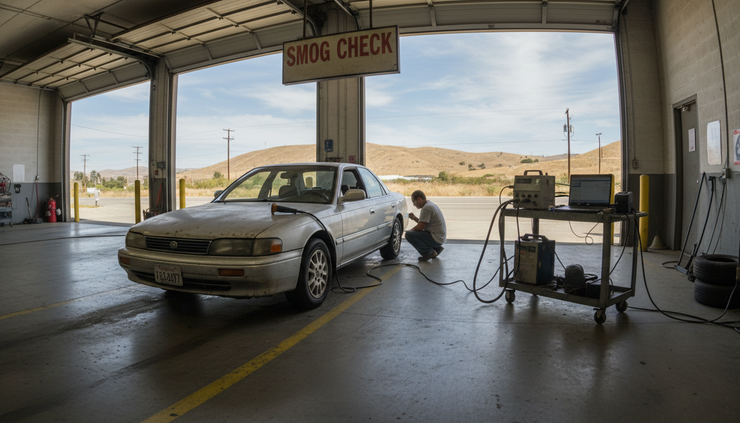
What to do on smog check day
The day of the test is about avoiding preventable issues. Do not make last-minute changes unless the car has an obvious problem.
A simple test-day plan works best:
Drive the car before the appointment
Give the engine time to warm up fully. Include some steady driving if possible.
Bring the right paperwork
Bring the DMV renewal notice if you have it. The station can usually look up the vehicle, but the notice helps confirm whether STAR testing is required.
Do not disconnect the battery
A battery reset can wipe readiness monitors. If the battery is weak, replace it well before the test and drive enough afterward for the monitors to complete.
Do not add random fuel additives
Some additives make big claims but do not fix mechanical problems. Use only products that are safe for your vehicle and legal for road use. Never rely on an additive to cover up a known emissions issue.
Tell the technician about recent repairs
If the car recently had emissions work done, mention it. The technician may check readiness before starting the official inspection, depending on station policy.
A pass means the station sends the certificate electronically to the DMV. You can then complete your registration renewal if every other requirement is handled.
If your car fails, read the report before replacing parts
A failed smog check is frustrating, but the inspection report gives useful clues. Do not start guessing. Look at the failure category first.
Failure type | What it may mean | Smart next step |
Check engine light | The computer found an emissions-related fault | Scan codes and diagnose the cause |
Readiness monitors incomplete | The computer has not finished self-tests | Drive normally after repairs or battery reset |
Visual inspection failure | A required emissions part is missing, altered, or not approved | Restore legal parts or provide CARB approval information |
Tailpipe emissions failure | The engine is producing too much pollution | Diagnose fuel, ignition, air, sensor, or catalyst issues |
Functional failure | A system did not operate as required | Test that specific system before replacing parts |
If the vehicle fails, California allows repairs and a retest. Some repair assistance options may be available through state programs for eligible owners, but requirements change. Check the Bureau of Automotive Repair or DMV resources for current details.
Common problems that cause smog failures
Many failures come from a short list of issues:
Worn spark plugs or ignition coils
Vacuum leaks
Faulty oxygen sensors
Bad catalytic converter
Exhaust leaks
Loose or damaged gas cap
Dirty or failing mass airflow sensor
Illegal aftermarket parts
Incomplete readiness monitors
Engine misfires
The catalytic converter is one of the most expensive parts on this list, so do not replace it without proper diagnosis. A converter can fail because of age, but it can also be damaged by misfires, oil burning, coolant leaks, or a rich fuel mixture. If the root cause remains, a new converter may fail again.
Special situations that need extra care
Some vehicles need a little more planning before the inspection.
The battery was recently replaced
A new battery can reset the vehicle computer. The car may run fine but still show incomplete monitors. Drive for several days before testing, using a mix of city and highway driving.
If you have a scan tool, check readiness before going to the station.
The car was recently repaired
After fixing an emissions issue, the check engine light may stay off, but the car still needs to complete its self-tests. Ask the repair shop whether the monitors are ready before scheduling the official smog check.
The vehicle is modified
Modified vehicles need proof that emissions-related parts are legal in California. Keep documentation for any CARB-approved intake, header, catalytic converter, or tune. A legal setup is much easier to pass than a setup that requires explanation.
The car has been sitting for a long time
A vehicle that sat for months may have stale fuel, weak battery voltage, flat-spotted tires, or rodent-damaged wiring. Drive it enough to confirm it runs smoothly before testing. If it smells strongly of fuel or misfires, repair it first.
The vehicle came from out of state
California may inspect emissions equipment that was not required in the same way elsewhere. Make sure the vehicle has the correct emissions label and required equipment for its configuration. If parts were removed or changed, the visual inspection can become the hard part.

The easiest way to pass is to avoid shortcuts
A clean smog check usually comes from a car that is maintained, warmed up, and ready. Shortcuts often backfire. Clearing codes, hiding warning lights, or swapping parts without diagnosis can cost more than fixing the real problem.
Use this quick checklist before the appointment:
The check engine light is off and works during startup
The battery has not been disconnected recently
Readiness monitors have had time to complete
The gas cap seals properly
The engine idles smoothly
The car is not overheating
There are no obvious exhaust leaks
Aftermarket emissions parts are California legal
The station matches the DMV requirement
The car is warm when it arrives
Passing a smog check in California is easiest when the vehicle has no unresolved emissions problems and the computer is ready to report that everything is working. Handle warning lights early, drive the car normally after repairs, choose the right station, and show up with the engine warm. That simple plan gives you the best chance of leaving with a passing certificate on the first visit.


Comments